

How to Tell a Bad Shingle Job From the Driveway
by Phillip McClain | Jul 8, 2025 | Home Inspection Notes
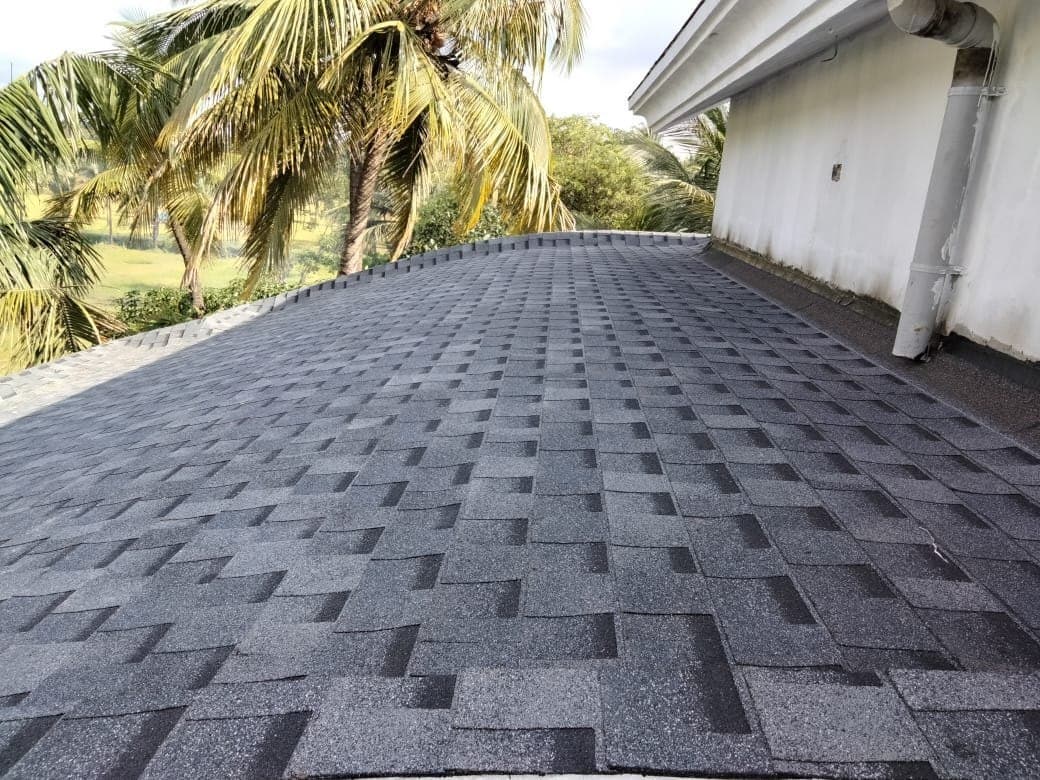
I get asked all the time how to tell if a roof is going to be a problem before paying for an inspection. Honestly, you can pick up most of the obvious signs from the driveway. A roof that was installed badly will tell on itself within a year or two of being put down, especially in Florida where the sun and storms don't let anything subtle stay subtle for long.
This isn't a substitute for actually getting up there with someone who knows what they're looking at. It's just a starting point. If any of these things are visible from the ground, the roof is worth a closer look.
Lifting tabs at the edges
Walk to the rake edge of the roof, the side that runs from gutter to peak. Look at the shingles right at the edge. Should be flat, sealed, and lined up.
If you see tabs that are lifting up off the roof, especially the bottom corners, the seal strip didn't take or the shingles weren't installed in warm enough weather. In Florida the seal strip activates from sun heat after install. If the install happened on a cool day and the roofer didn't hand-seal, the shingles never bonded properly.
Lifting tabs catch wind in storms and tear off. Once tabs are lifting visibly, the next storm with serious wind is going to lose some of them.
Sagging or wavy ridge line
Stand back across the street and sight along the ridge of the roof. Should be straight as a ruler. Any visible dip or curve in the ridge means the decking underneath is failing or the framing has issues.
A sag in the middle of the ridge is sometimes just the rafters settling, but it can also mean water damage under the roof or a ridge beam with problems. Either way it's not normal and it's not cosmetic.
A roof that has multiple visible undulations along the ridge or the field of the roof has structural decking problems. That's a roof replacement plus partial deck replacement, which is a bigger project than just shingles.
Exposed nails on the surface
Look closely at any visible flashing, valleys, ridge cap, or hip lines. If you can see actual nail heads exposed on the surface where they shouldn't be, those nails are going to rust and let water in. They should have been covered by the next course of shingles or by sealant.
This shows up most often along ridges and at flashing transitions. A handful of exposed nails is fixable. Lots of them is a sign of a sloppy install.
Mismatched shingle areas
Sometimes a roof is uniform from one slope to the next and sometimes it isn't. A single area that's a slightly different color usually means a section was replaced after damage or a leak. That's not necessarily bad, depending on why it was done.
What concerns me is when the patch is from a different shingle product entirely, or when there are several mismatched areas, or when the patch lines up with where I'd expect a chronic leak (around chimneys, around vent stacks, in valleys). That tells me the roof has had ongoing issues and the seller patched as needed.
If a roof has had multiple patches, I want to know what was leaking and whether it actually got solved.
Granule loss and the gutter test
This one I do recommend you check. Look at the bottom of your downspouts, or pull off a downspout strainer if you have them. If there's a heavy buildup of asphalt granules (the small dark mineral specks that coat shingles), that's significant granule loss.
Some granule loss is normal, especially with new shingles in the first couple of months as loose granules wash off. Heavy ongoing granule loss in older roofs means the shingles are weathering and approaching end of life. That roof is closer to needing replacement than it looks from the curb.
In Marion County I see roofs that look fine from the ground but have major granule loss visible on inspection. UV exposure here is brutal. Shingles age faster than the manufacturer's stated lifespan, and a "30 year" architectural shingle here is more like a 18 to 22 year shingle if it gets full sun.
Curling and cupping
Look at the field of the roof on a sunny afternoon. Shingles should lay flat. If you see edges curling up (looks like the shingles are smiling), that's age. If the entire shingle has cupped (looks like a shallow bowl), that's also age, sometimes accelerated by attic ventilation problems.
Curled shingles let water under them in wind-driven rain. Once shingles are visibly curling on a substantial portion of the roof, the roof is in its final years.
Algae streaking
Black streaks running down from the ridge to the gutters. Common on Florida roofs. The algae itself, Gloeocapsa magma, isn't actually damaging the shingles much. The aesthetic damage is what people notice. Some shingle products have built-in algae resistance, some don't.
If you see heavy streaking on a 5-year-old roof, it might just be the wrong shingle for the climate. If you see it on a 15-year-old roof, that's about right for what you'd expect here.
A roof can be cleaned. Soft-wash service runs a few hundred dollars and the streaks come off without damaging the shingles. High-pressure washing damages shingles. Don't let anyone do that.
Flashing that isn't right
The metal flashing at chimneys, walls, and skylights is where most leaks actually happen. From the ground I'm looking at chimney flashing, which should be in two pieces (step flashing under the shingles plus counterflashing tied into the chimney), and at where the roof meets a wall, where flashing should be visible behind the siding or stucco.
If I can see caulk smeared across a chimney instead of proper flashing, that's a temporary fix that's already failing. If a roof-to-wall transition looks like there's no flashing at all, water's been finding its way in for a while.
When to call
If you see two or more of these things from the ground, the roof is worth getting an actual inspector or roofer up there to take a look. Most roofs that are in trouble are visibly in trouble. The ones that are fine usually look fine.
A roof inspection during a real estate transaction is part of what I'm doing anyway. If you're not buying a home but want to check on your existing roof, a lot of roofers will give a free assessment if you're considering work. Just go in knowing they're motivated to find a reason for that work.